 Reviews



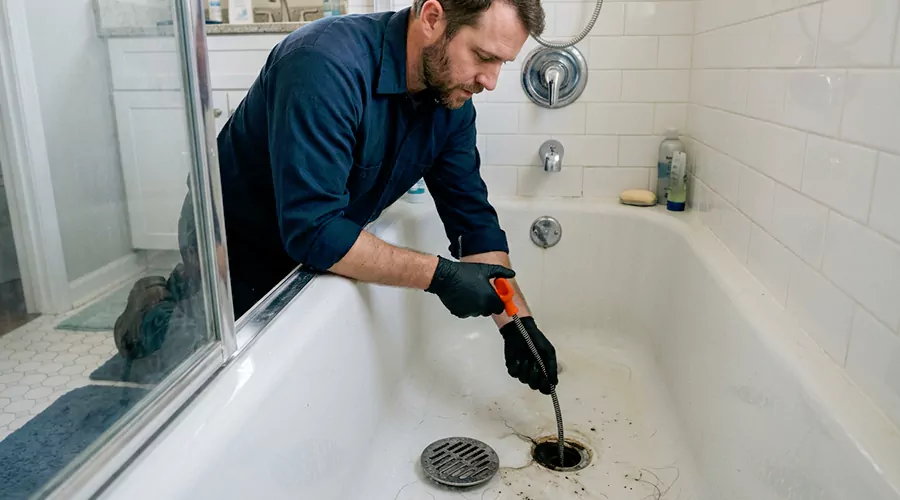
You can often unclog a shower drain by removing trapped hair near the drain opening before using a plunger or drain snake. Professional drain cleaning averages about $246 in 2026 and commonly costs $147 to $352.
Hair is the most common shower blockage. Soap residue can bind the strands into a dense mass that slows water until standing water appears around your feet.
The safest approach is to start at the drain opening and move deeper only when needed. Mechanical removal usually makes more sense than immediately pouring a chemical into standing water.
What Usually Clogs a Shower Drain?
Most shower clogs begin when loose hair collects beneath the drain cover. Soap residue sticks to that hair and gradually makes the obstruction thicker. Mineral buildup can narrow the available space further in homes with harder water.
- Shampoo residue can contribute to the buildup.
- Body-care products containing oils can also leave material behind.
- A small object can occasionally enter through a wide drain opening.
- The blockage often develops gradually rather than stopping the water in one day.
That explains why slow drainage is usually the first warning. The supplied keyword shower drain clogged reflects this same problem state.
How Does a Shower Drain Clog Get Worse?
A shower clog normally progresses from slightly slower drainage to standing water. Hair continues catching new material as the opening becomes smaller. Eventually the shower can stop draining during normal use.
| Stage | What You Notice | Likely Condition | 2026 Cost Exposure |
|---|---|---|---|
| Early | Water drains slower | Hair starting to collect | Often DIY |
| Developing | Water pools briefly | Hair and residue buildup | Low tool cost |
| Heavy | Standing water remains | Dense obstruction | Around $147 to $352 |
| Deeper problem | Other drains react | Shared drain issue | Can exceed basic drain cleaning |
- Professional drain cleaning averages about $246 in 2026. A simple shower clog can sometimes be cleared with DIY tools costing less than $20.
- Waiting gives hair more time to collect soap residue.
- Early removal is usually easier than clearing a completely stopped drain.
What Are the Signs of a Clogged Shower Drain?
A shower drain usually gives several warnings before it becomes completely blocked. The speed of the water matters more than the appearance of the drain cover. A clean-looking grate can hide a dense hair mass underneath.
- Water collects around your feet. The drain cannot accept water at the normal shower rate.
- The puddle disappears slowly after the shower. A partial opening remains.
- The drain makes gurgling sounds. Air is moving through restricted piping.
- Hair is visible under the cover. The obstruction may be close enough to remove manually.
- Water drains normally for a minute then slows. The available opening may be too small for sustained flow.
- The drain smells musty. Organic material may be collecting below the grate.
- Water stops moving entirely. The obstruction may have become dense.
- The clog returns soon after cleaning. Material may remain deeper in the pipe.
- Another bathroom drain becomes slow. The restriction may extend beyond the shower.
- Water backs up through another fixture. A shared drain problem becomes more likely.
Standing water and slow drainage are common signs of a developing shower clog.
What Should You Do Before Clearing the Drain?
Turn off the shower before working around standing water. Let as much water drain naturally as possible. Wear waterproof gloves because hair and organic material inside the drain can be unpleasant to handle.
- Remove bottles from the shower floor.
- Dry the area enough to work safely.
- Inspect how the drain cover is attached.
- Some covers lift away.
- Others use screws.
- Do not pry aggressively against tile or a finished shower pan.
Once the cover is removed you can see whether the obstruction sits within reach. That first inspection often determines the best way to unclog shower drain buildup without using stronger methods.
How Do You Remove Hair From a Shower Drain?
Pulling out visible hair is often the fastest first repair because many shower clogs sit close to the drain opening. Use gloved fingers or a flexible plastic hair-removal tool to lift the material upward instead of pushing it farther into the pipe.
- Remove the drain cover.
- Shine a flashlight into the opening.
- Grab any visible hair.
- Pull slowly because the material can extend farther than expected.
- Place the removed debris directly into the trash.
- Do not rinse it back down another drain.
- A plastic barbed tool can reach below the visible opening.
- Avoid scratching finished drain surfaces with sharp metal.
Once the large material is removed you can test the water flow.
Can Hot Water Clear the Remaining Buildup?
Hot water can help rinse loose soap residue after the hair mass has been physically removed. It should be used as a finishing step rather than a substitute for removing a dense hair obstruction.
- Use hot tap water when pipe material is uncertain.
- Avoid extreme water temperatures around plastic components.
- Run the water gradually.
- Watch the drainage speed.
- Stop if water begins collecting again.
One current shower-drain guide warns against boiling water when PVC piping is present. Physical hair removal remains the more important step because heat does not make long strands disappear.
How Do You Plunge a Shower Drain?
A cup plunger can loosen a blockage when debris sits beyond easy reach. The plunger needs a good seal around the drain. Enough water should be present to cover the edge of the rubber cup.
- Remove the drain cover when possible.
- Place the cup directly over the opening.
- Add enough water to cover the cup edge.
- Press down to create a seal.
- Use controlled up-and-down strokes.
- Keep the cup centered.
- Lift the plunger after several strokes.
- Watch whether the water begins draining faster.
A tight seal is important because pressure must reach the obstruction rather than escape around the cup. Current 2026 guidance lists plunging as one of the common methods for clearing a shower with standing water.
How Do You Snake a Shower Drain?
A drain snake reaches farther than a hair-removal strip when the obstruction sits deeper inside the pipe. Feed the cable slowly until resistance increases. Rotate the cable while advancing it through the buildup.
- Insert the cable into the opening.
- Advance it in short sections.
- Turn the handle when resistance appears.
- Avoid forcing the cable.
- Pull the snake back slowly.
- Remove any hair attached to the cable.
- Repeat only when drainage improves.
The supplied keyword snaking a drain fits this deeper mechanical method. Current drain guidance recommends turning the snake into the obstruction and withdrawing it carefully so captured material comes back with the cable.
Should You Use Chemical Drain Cleaner?
Chemical cleaner should not be the first choice when hair is accessible because mechanical removal directly removes the material creating the blockage. Chemical products also require strict label use and must never be mixed with other cleaners.
- The supplied keyword drano for shower drain reflects a real search query.
- A product should be used only when its label specifically permits that drain type.
- Never mix drain opener with bleach.
- Never combine different drain-opening products.
- Wear eye protection when chemical liquid is present.
- Do not snake a drain immediately after adding an unknown chemical because liquid can splash during mechanical work.
- Physical removal gives you more control over a typical hair clog.
How Can You Test Whether the Drain Is Clear?
A repaired shower drain should accept a normal stream of water without forming a growing puddle. Test gradually rather than turning the shower to full flow immediately.
- Replace the drain cover loosely.
- Run water at a low rate.
- Watch the area around the drain.
- Increase the flow after about 30 seconds.
- Continue for several minutes.
- The water level should remain low.
A clog that seems fixed for only the first minute may still be partly present. This extended test is useful because partial blockages can pass a small amount of water while failing under normal shower flow.
When Should You Call a Professional?
Professional help becomes appropriate when a snake cannot restore normal flow or the clog returns repeatedly. Multiple slow fixtures are a stronger warning because the blockage may sit in shared piping rather than directly beneath the shower.
Professional drain cleaning costs $147 to $352 in 2026 with an average near $246. Main sewer clog repair averages about $380 when the problem extends to the main line.
Seek deeper diagnosis when:
- Several drains become slow together.
- Water backs up through another fixture.
- Sewage appears in the shower.
- A snake cannot reach the obstruction.
- The clog returns within a short period.
- The drain has stopped completely after multiple DIY attempts.
A deeper inspection can identify problems that cannot be seen through the shower opening.
How Can You Prevent Another Shower Drain Clog?
A hair catcher provides one of the simplest ways to reduce future blockages. Clean the catcher frequently because collected hair can still slow drainage when it covers the openings.
- Remove visible hair after showers.
- Clean the drain cover regularly.
- Use a hair-catching screen.
- Watch for slowing water.
- Remove early buildup before standing water develops.
- Run hot water after cleaning loose residue.
Current 2026 shower-drain guidance recommends regular hair removal as a primary prevention step. Prevention costs very little compared with the $147 to $352 typical professional drain-cleaning range.
Conclusion
Knowing how to unclog a shower drain starts with removing hair before moving to stronger methods. Inspect beneath the drain cover and pull visible buildup out first. Use a plunger when the clog sits deeper. A drain snake can reach farther when needed. Repeated clogs or backups in several fixtures deserve deeper diagnosis. This week, add a hair catcher and clean the drain opening before water starts pooling.
Frequently Asked Questions
Can hair completely stop a shower drain?
Yes. Hair can form a dense mass after soap residue binds the strands together. The blockage can eventually stop most water flow.
How long should a shower drain take to clear?
Water should move continuously during normal shower use. A puddle that remains after the water stops suggests restricted drainage.
Can I use a wire hanger?
A bent hanger can reach some shallow material. A plastic drain tool reduces the chance of scratching finished surfaces.
Why does my shower drain clog so often?
Hair may be getting past the drain cover or part of the previous clog may remain deeper in the pipe.
Does a hair catcher really help?
Yes. Catching hair before it enters the drain reduces the material available to build the next blockage.